
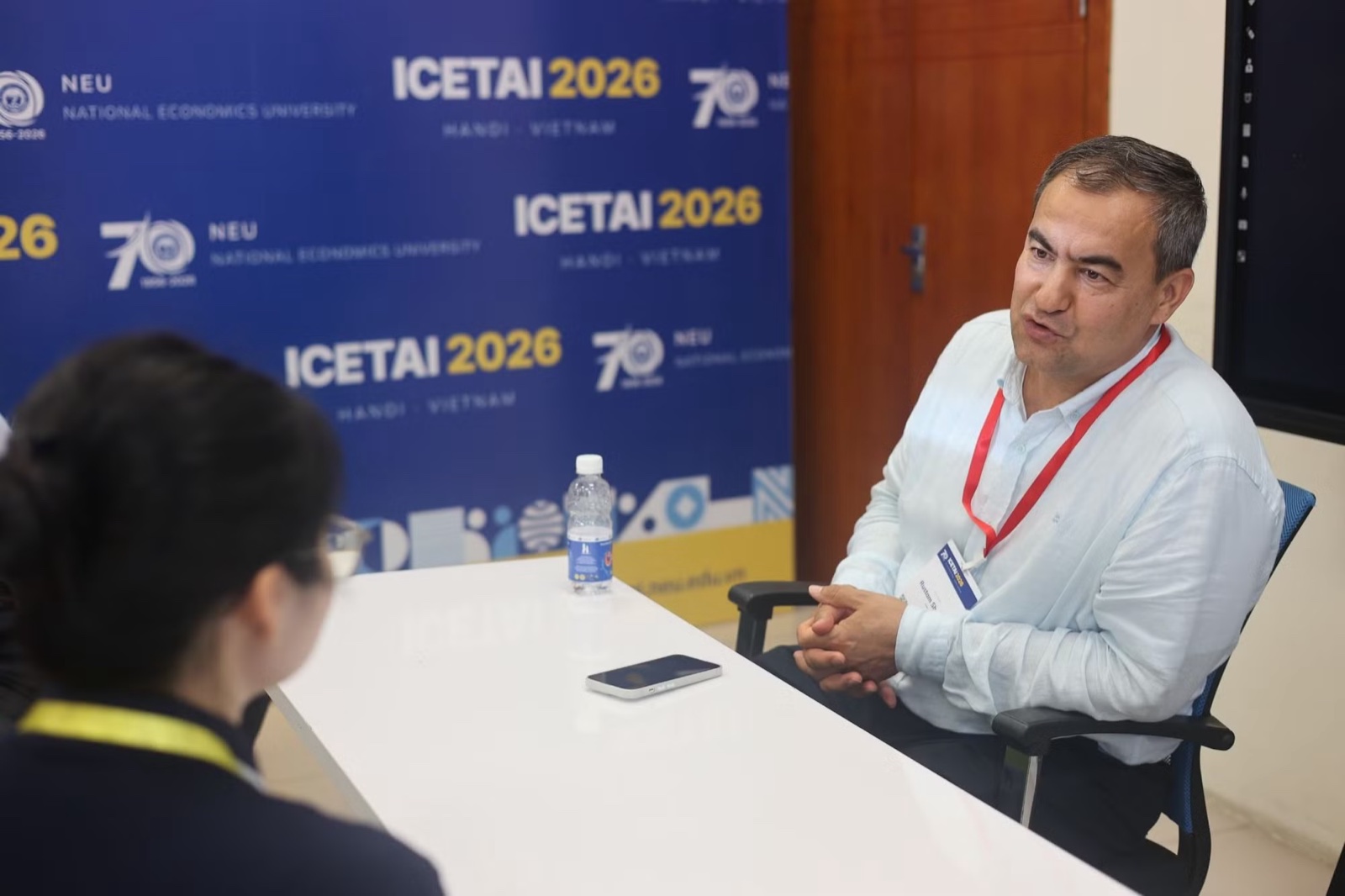
Prof. Shadiev Rustam
College of Education, Zhejiang University, China
Speaking to Vietnamese education outlet Giao Duc Viet Nam after ICETAI 2026, Prof. Rustam Shadiev set out how mobile technology and generative AI can be applied to language learning. The starting point, he said, is a problem familiar across Asia: learners of English have almost no environment in which to use the language in everyday life.
"Learning a foreign language in a native environment is usually easier and more effective," he said, "but if you learn a language and have nobody to talk to, it will be very difficult."
Moving learning out into real contexts
His research aims to extend learning from the classroom into authentic situations. In a unit on weather, for instance, learners can go outside, photograph the sky, describe it in English and record themselves — turning a textbook topic into something they have personally observed and put into words.
Generative AI extends that further, by being available at the moments when a teacher and classmates are not — ten at night, for example. It gives learners somewhere to practise at the hours when the alternative is not practising at all.
The teacher's digital twin
One line of application now under study is the "digital twin": an AI system designed to communicate the way a person does. "We can load a teacher's entire knowledge and way of thinking into this 'twin,'" Prof. Shadiev said. "Whenever students need to ask something, the AI system can give an accurate answer, just as if the teacher were guiding them directly."
The view toward Vietnam
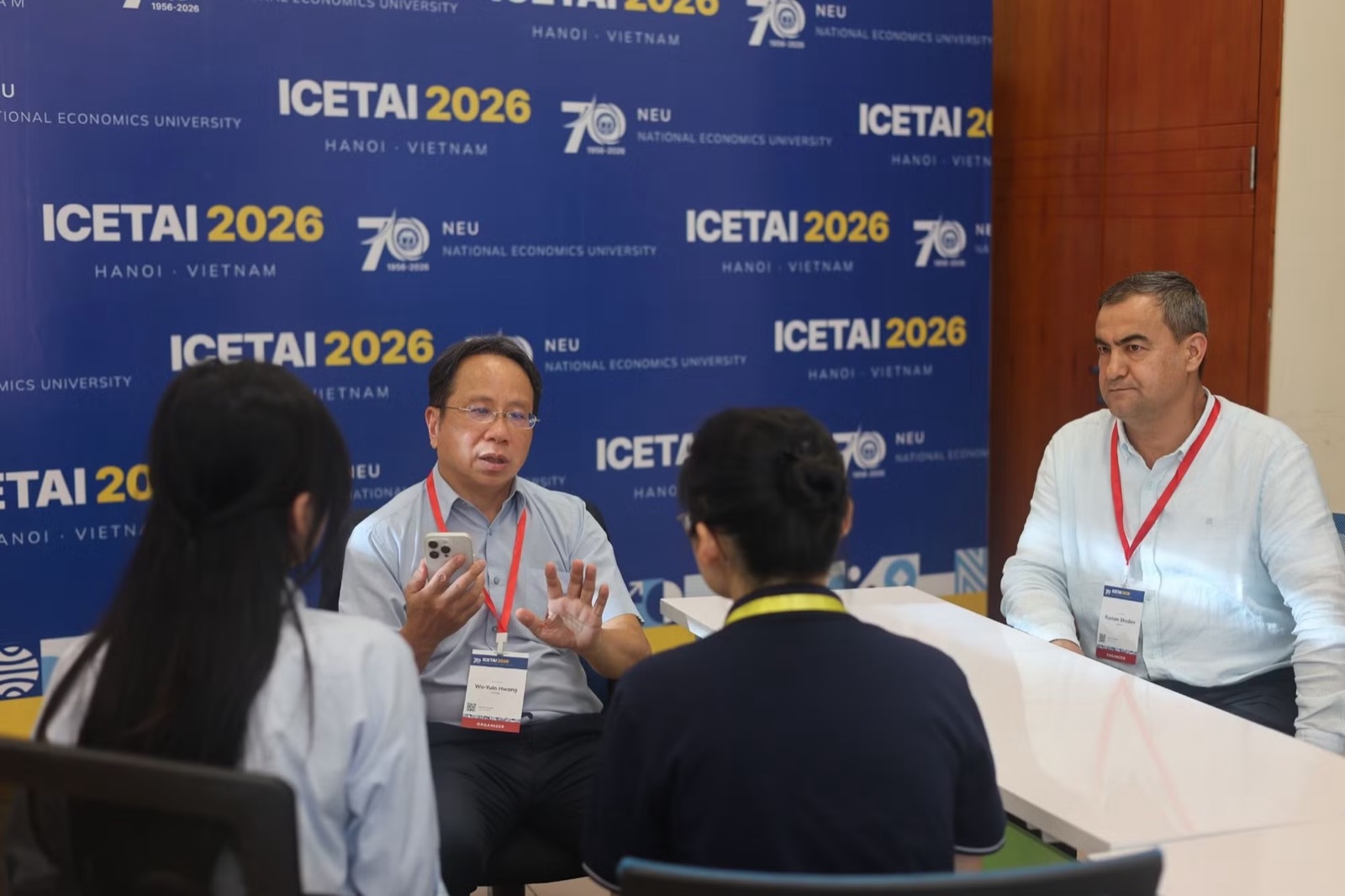
Drawing the comparison with Vietnam, Prof. Shadiev observed that neither Vietnam nor China is a native English-speaking environment, and that both education systems still place heavy weight on examinations. At the same time, he noted that generative AI is already in fairly wide use among students and academics in Vietnam.
"I hope we can strengthen professional exchange, combining each side's strengths to support one another," he said.
Adapted and translated from the Vietnamese-language interview by Doan Nhan, published by Giao Duc Viet Nam on September 1, 2026.
Read the original article on Giao Duc Viet Nam